When I first began this digital media course I listed my ideas of digital media literacy as follows: Zoom, Seesaw, Dojo, YouTube, HappyNumbers, ABC Mouse, Chat rooms, Blogs, Social Media and Google. My idea of DML was that it consisted of learning to navigate computer websites. After the first week’s readings, I revised my list to include: Television, Books, Newspapers, Entertainment, Education, Information, Political, Satirical, Reading, Thinking, Discussions, Communication, Sharing of ideas and Connection to the world. I learned that DML involves not only computer literacy but also other forms of traditional informational tools. I also learned that these are powerful tools used to influence the way we think, the choices we make and even how we live(Scheibe & Rogow, 2011).
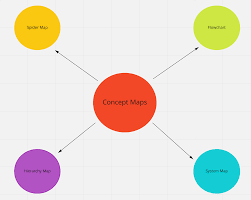
Concept/mind mapping is a great tool to use in order to connect concepts being learned in the classroom! For example, in my K2 classroom, we regularly use Venn diagrams, T-charts and graphic organizers to connect ideas, new information and facts learned as we engage in various unit studies throughout the school year. Concept mapping can be a great tool to use in order to develop critical thinking skills in young children and it is a great instructional learning strategy for young learners(Sudararajan, et al, 2018). In the article, The Process of Collaborative Concept Mapping in Kindergarten and the Effect on Critical Thinking Skills, the authors, NarayanKripa Sundararajan, Olusola Adesope and Andy Cavagnetto state, “Novak and Wandersee (1990) theorized that young learners may learn how to make “good” concept maps quickly since they have not yet been exposed to extensive rote-learning”(Sudararajan, et al, 2018). I find that concept mapping is a great visual tool to use for those of us who are visual learners as well! It helps connect ideas and thoughts in a way that can be easily decoded and internalized by different types of learners.
Mind maps can be used with very young learners! It is very easy to teach and use and can be a very helpful tool in connecting new concepts such as new vocabulary words. It can be particularly helpful for English Language Learners. The linked video demonstrates how mind mapping is used to help young learners connect new vocabulary to existing ideas!
Do you use mind maps in your classroom? How do you implement mind/concept mapping in your classroom? How do you incorporate media literacy into mind/concept mapping?
Citations:
Scheibe, C, L., Rogow, F.,( 2011), The Teacher’s Guide to Media Literacy : Critical Thinking in a Multimedia World, PUBLISHER SAGE Publications.
Sundararajan, N., Adesope, O. & Cavagnetto, A. (2018). The Process of Collaborative Concept Mapping in Kindergarten and the Effect on Critical Thinking Skills. Journal of STEM Education, 19(1),. Laboratory for Innovative Technology in Engineering Education (LITEE). Retrieved August 19, 2021 from https://www.learntechlib.org/p/182981/.
 Digital and Media Literacy